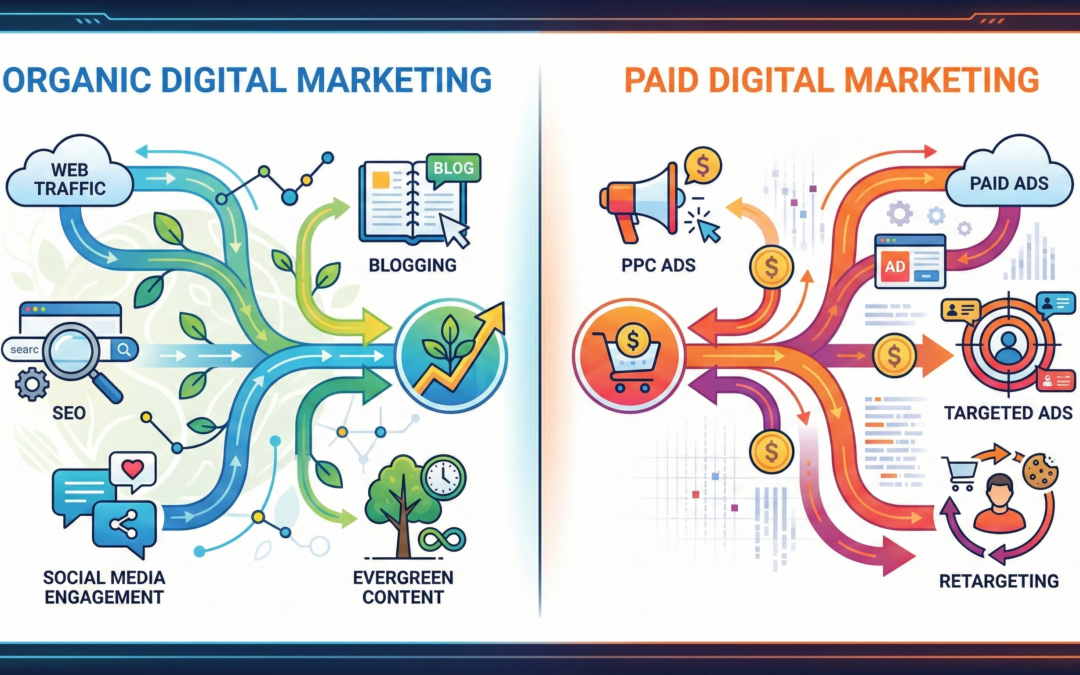
Digital marketing has evolved into a performance-driven ecosystem where businesses compete for visibility, trust, and conversions. Within that landscape, one debate always resurfaces: Organic vs paid digital marketing which one brings the highest return?
The truth is, both channels can deliver incredible results when used intentionally. But they work differently, pay off at different speeds, and support different phases of the customer journey. Understanding those distinctions is essential if you want smarter marketing investments instead of guessing where to put your budget.
This guide breaks down the key differences, benefits, costs, timelines, and strategic use cases of organic and paid digital marketing with updated trends, examples, statistics, and practical insights marketers can act on right now.
And in chennai do you know the Best digital marketing freelancer in Chennai?
Let us see about Organic vs paid Digital marketing
Contents
- 1 What Do Organic vs Paid Digital Marketing Really Mean?
- 2 The Core Differences: Organic vs Paid Digital Marketing
- 3 Why Organic Digital Marketing Still Matters ?
- 4 Where Paid Digital Marketing Wins?
- 5 The Cost Factor: Cheap vs Expensive Is a Myth in organic vs Paid digital marketing
- 6 Performance Timelines: When to Expect Results
- 7 Which Converts Better? (Depends on Intent)
- 8 Trends in 2025–2026: What Marketers Should Know
- 9 Choosing the Right Strategy: Use Cases by Business Type
- 10 FAQs: Organic vs Paid Digital Marketing
- 11 Key Takeaways
- 12 Conclusion: So Organic or Paid? In Organic vs Paid digital marketing The Smart Answer Is Both
- 13 Actionable CTA
What Do Organic vs Paid Digital Marketing Really Mean?
Before comparing the two, it helps to define what they actually include:
Organic Digital Marketing (Free Traffic via Content & Engagement)
Organic marketing refers to building online visibility without directly paying for traffic or clicks. Common tactics include:
- SEO (search engine optimization)
- Organic social media content
- Email marketing (non-sponsored)
- Community engagement
- Blogging & content marketing
- YouTube videos
- Thought leadership & PR
- UGC (User-generated content)
- Review marketing
Organic channels focus on trust, credibility, and long-term compounding results.
Paid Digital Marketing (Traffic from Advertising)
Paid marketing refers to buying exposure, clicks, or conversions. Channels include:
- Google Ads (Search & Display)
- Meta (Facebook & Instagram) Ads
- LinkedIn Ads
- TikTok Ads
- YouTube Sponsored Ads
- Influencer marketing (paid)
- Sponsored posts & native ads
- Programmatic advertising
Paid channels focus on speed, targeting, and scale.
Could you understand about organic vs paid digital marketing, Now let us discuss more deeply.
The Core Differences: Organic vs Paid Digital Marketing
Here’s a simplified breakdown of how they differ:
| Factor | Organic | Paid |
|---|---|---|
| Cost | Time & expertise | Budget-dependent |
| Speed | Slow | Fast |
| Longevity | Long-term compounding | Short-term (ends when budget stops) |
| Trust factor | High | Moderate |
| Targeting | Limited | Advanced |
| Measurement | Medium | High |
| Competition | Algorithm-based | Auction-based |
| Best for | Authority & retention | Acquisition & scaling |
Why Organic Digital Marketing Still Matters ?
Many brands underestimate how valuable organic traffic is, especially for content-led businesses, high-ticket services, and B2B brands.
1. Higher Trust and Credibility
Users trust search results, reviews, and brand content more than advertisements.
Surveys show 88% of consumers trust online reviews as much as personal recommendations, and organic content feeds that trust.
2. Sustainable Long-Term ROI
Once ranked, an organic blog or video can drive traffic for years. Evergreen SEO content often becomes a brand’s highest ROI asset over time.
3. Ideal for Consideration & Retention
Organic channels influence buying decisions before customers are ready to purchase and help retain them after.
Examples:
- A blog educating about “best cloud solutions” influences B2B decisions.
- A YouTube tutorial keeps a software user engaged post-purchase.
4. Compounds Like an Investment
SEO is one of the few marketing channels where effort compounds. A paid campaign disappears when budget stops — organic doesn’t.
Where Paid Digital Marketing Wins?
Paid tactics shine in areas where organic struggles.
1. Speed & Immediate Results
Want leads today? Paid wins.
Ads can start generating traffic within hours, ideal for:
- product launches
- seasonal campaigns
- sales
- events
- new businesses
2. Precise Targeting and Segmentation
Paid platforms know user behavior at granular levels:
- demographics
- interests
- intent signals
- browsing history
- purchase history
This makes paid channels powerful for high-ROI performance campaigns.
3. Scalability
Paid marketing allows a business to increase leads on demand. As long as the CAC (cost per acquisition) stays profitable, scaling is straightforward.
4. Measurable & Data-Rich
Paid channels produce real-time data:
- CPC
- CTR
- CPA
- ROAS
- LTV
- Conversion paths
This level of analytics gives growth teams clarity and control.
The Cost Factor: Cheap vs Expensive Is a Myth in organic vs Paid digital marketing
Many assume organic is “free” and paid is “expensive.” Reality is more nuanced.
Organic Costs:
- content production
- SEO tools
- strategy & expertise
- time (biggest cost!)
- team or freelancers
Paid Costs:
- ad spend
- CAC (customer acquisition cost)
- creative assets
- tracking & optimization
Both require investment they just invest into different currencies (time vs money).
Performance Timelines: When to Expect Results
| Channel | Typical Time to See Results |
|---|---|
| SEO | 3–9 months |
| Content marketing | 2–6 months |
| Organic social | Depends heavily on niche & platform |
| Paid ads | Same week (sometimes same day) |
This is why startups often launch with paid ads while building their organic foundation in parallel.
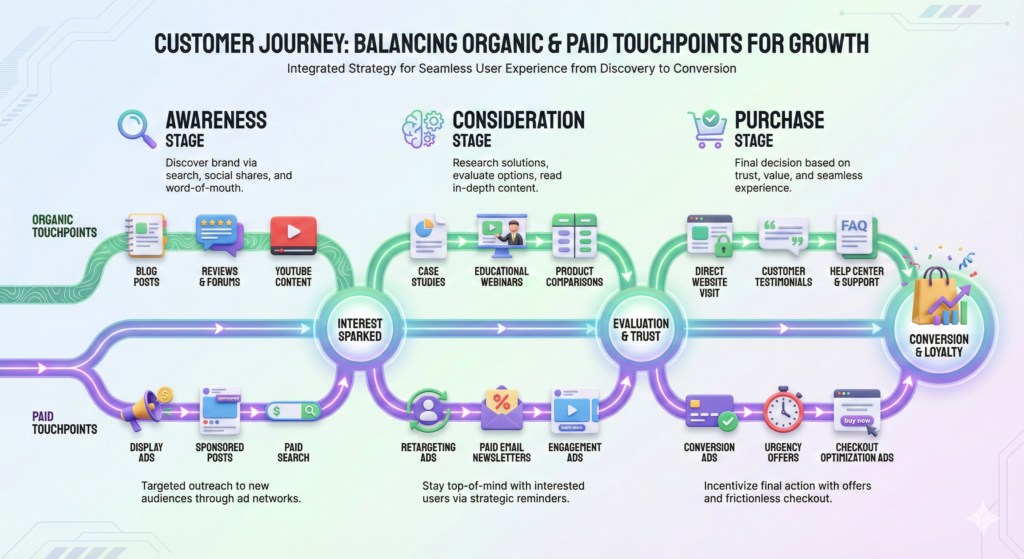
Which Converts Better? (Depends on Intent)
Conversion varies by intent stage of the funnel:
| Funnel Stage | Best Channel |
|---|---|
| Awareness | Paid + Organic Social |
| Consideration | Content + SEO + Retargeting Ads |
| Purchase Intent | Paid Retargeting + PPC |
| Retention | Email + Content + Community |
| Advocacy | Organic Word of Mouth + UGC |
Modern marketing rarely chooses organic vs paid digital marketing it builds integrated funnels.
Trends in 2025–2026: What Marketers Should Know
Digital behavior is shifting fast. Here are key trends influencing both channels:
Trend 1: Creators Influence Organic Growth
UGC and micro-creator content outperform branded content for authenticity.
Trend 2: Paid Ads Are Getting More Expensive
Auction platforms are crowded. CAC for Facebook & Google increased dramatically over the last 3 years, pushing brands toward hybrid strategies.
Trend 3: Algorithm-Driven Content Consumption
Organic success now relies on:
- content formats
- watch time
- retention
- engagement signals
Not follower count.
Trend 4: First-Party Data Advantage
Email, community groups, and CRM data are rising as paid targeting faces privacy restrictions.
Trend 5: AI Content + Human Strategy
AI accelerates content creation, but brands that add human insights, POV, and research win search intent.
Choosing the Right Strategy: Use Cases by Business Type
Startups
- Paid: validation & lead gen
- Organic: SEO foundation for later scale
Local Businesses
- Paid: geo-targeted ads
- Organic: Google Business Profile + reviews
B2B & High Ticket Services
- Organic: content + authority + lead nurturing
- Paid: retargeting & decision-stage ads
Ecommerce
- Paid: performance ads
- Organic: SEO + UGC + community + influencers
FAQs: Organic vs Paid Digital Marketing
Q1: Is organic marketing better than paid?
Not always. Organic wins in trust and longevity; paid wins in speed and scale.
Q2: How long does organic take to work?
SEO and content typically take 3–9 months depending on competition.
Q3: Are paid ads still worth it with rising costs?
Yes, but they require better creative, better targeting, and strong retention models.
Q4: Do brands need both?
Most profitable brands use hybrid strategies because customer journeys are multi-touch.
Key Takeaways
- Organic = long-term authority & compounding ROI
- Paid = fast traffic, scalable demand, measurable performance
- The most profitable strategy in today’s market is rarely “either/or”
- Hybrid funnels outperform single-channel marketing
Conclusion: So Organic or Paid? In Organic vs Paid digital marketing The Smart Answer Is Both
The “Organic vs paid digital marketing” debate misses a bigger truth: modern buyers don’t convert after a single touchpoint. They research, compare, ask peers, consume content, and then make decisions.
Paid fuels customer acquisition.
Organic fuels trust, authority, and retention.
Brands that scale sustainably build both over time.
Trusting this Organic vs Paid Digital Marketing blog helps you to understand about it.
Actionable CTA
If you’re considering how to balance organic and paid strategies for your brand, I can help you structure a hybrid funnel, audit your competitors, and suggest the most profitable marketing mix for your business goals. Just tell me your niche or target market and I’ll break down what works today.
Follow –> LinkedIn